Measured entry
hextaui-auth-phone-verify
A client-side React phone verification card shipped as a HextaUI registry block. It covers phone entry, country selection, one-time-code input, resend cooldown, loading, success, expiry, and error states. It relies on shadcn-style UI primitives, Radix-based controls, input-otp, Lucide icons, Tailwind classes, and application callbacks for the actual SMS and verification work.
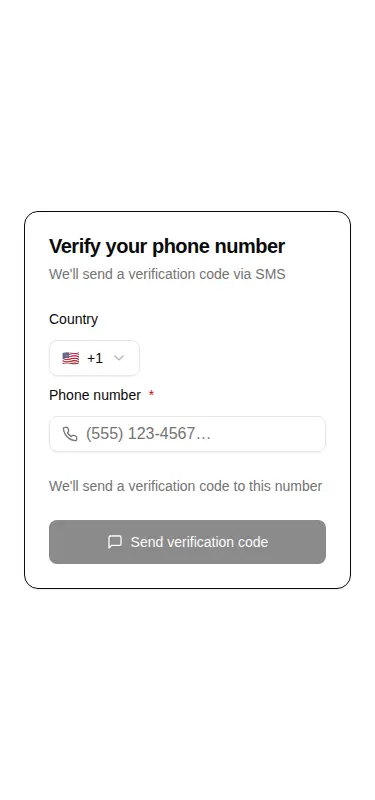
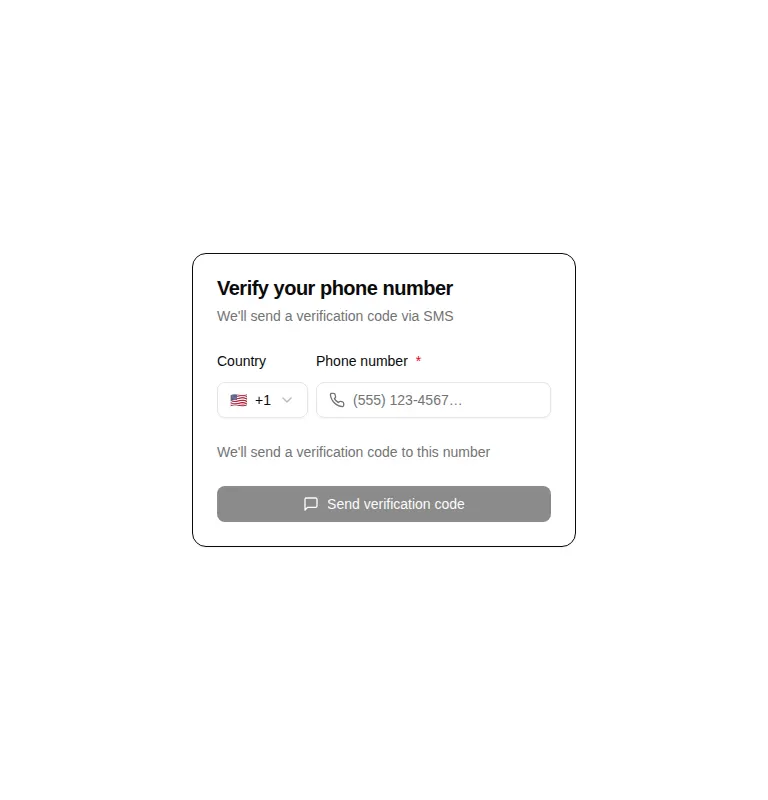
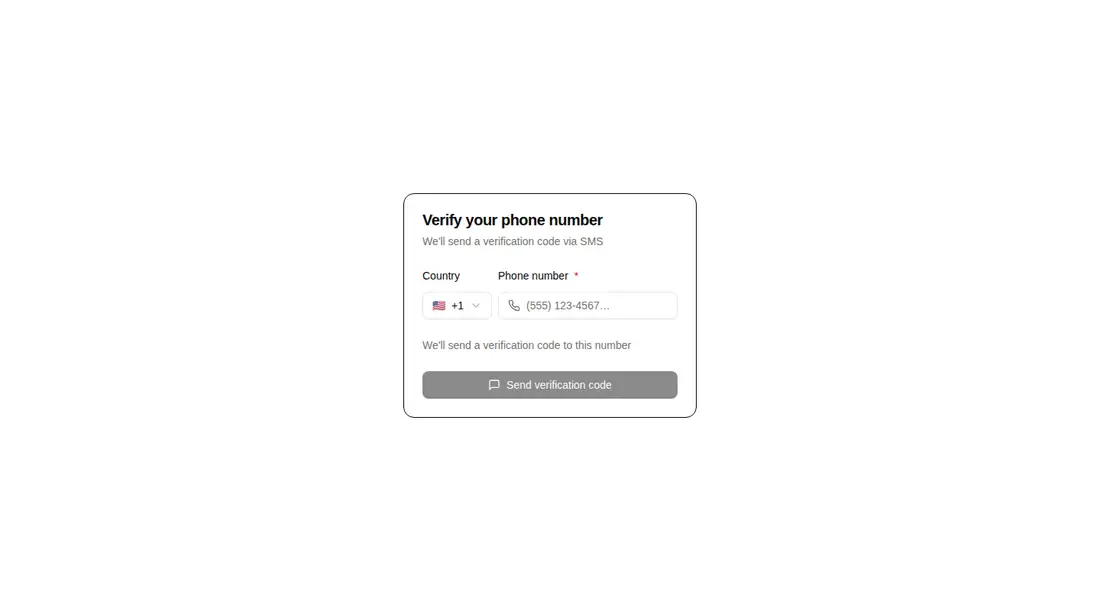
Measured
Every value below was written by the harness on the run that produced the frames above. None of it is derived from the prose.
| Build | OK |
|---|---|
| Mount | OK |
| Console errors | 0 |
| Uncaught page errors | 0 |
| Horizontal overflow | clean at 375, 768, 1440 |
| Axe critical | 0 |
| Axe serious | 0 |
| Axe moderate | 0 |
| Axe minor | 0 |
| Gzip marginal | 71.1 KB (136.5 KB build, 65.4 KB baseline) |
| Bare mode | FAIL |
| Provider required | NO |
| Demo used | written from the component source API |
What the harness recorded
BARE BUILD
✗ Build failed in 2m 21s
error during build:
[vite:load-fallback] Could not load <sandbox>/src/lib/utils (imported by src/cut/blocks/auth/auth-phone-verify.tsx): ENOENT: no such file or directory, open '<sandbox>/src/lib/utils'
Verdict
A well-scoped UI shell for teams that already own the verification backend. Its state coverage, responsive behavior, and clean tested accessibility make it practical, but it is not drop-in for a bare React app and needs a shadcn-style setup before it will build and mount.
Use it if
- You need a ready-made phone entry and one-time-code flow while keeping SMS delivery and verification in your own backend.
- Your app already uses shadcn-style registry components, Tailwind theme tokens, and path aliases.
- You want controlled loading and status states with hooks for resend and changing the phone number.
- You need a responsive auth card that mounts cleanly and has no detected accessibility violations in the tested state.
Skip it if
- You need a complete authentication service, since this block supplies interface callbacks rather than SMS delivery, code storage, or server-side verification.
- Your project does not use Tailwind or shadcn-style primitives and you do not want to port its component imports and theme tokens.
- You need broad international phone parsing and validation out of the box; formatting is specialized for the United States and Canada and otherwise keeps digits only.
- You want a small dependency footprint and do not already use the included Radix controls, input-otp, and Lucide icons.
Install
| Declared dependencies | @radix-ui/react-slot, @radix-ui/react-label, @radix-ui/react-separator, input-otp, @radix-ui/react-select |
|---|---|
| Missing on install | none |
| Bare install | fails once the shadcn-style helpers are removed, so it needs that setup |
| Provider | no provider required in the harness |
In a non-shadcn project, add the shared class-name utility and its path alias, recreate or install the button, card, field, input group, one-time-code input, select, and separator primitives, install the declared Radix packages plus input-otp and Lucide React, and provide the Tailwind theme tokens and utility styles used by the block. Wire the submit and resend callbacks to a server-side SMS verification flow.
Source and credit
This page is a review, not a copy. The component source lives with its author and this site does not republish it. Read the license before you use anything.
Author repository
github.com/preetsuthar17/HextaUIAlternatives
Other published entries for the auth-form pattern, ordered by what they measured: mounts first, then clean axe scans, then bare-mode passes, then the smaller bundle.
- meraki-auth-sign-in-card-with-side-imageminimal-flat
- Renders
- YES
- A11y
- 0
- Gzip
- 18.9KB
- Bare
- pass
- Prov
- NO
- shadcn-block-login-01minimal-flat
- Renders
- YES
- A11y
- 0
- Gzip
- 30.3KB
- Bare
- fail
- Prov
- NO
- shadcn-block-login-02minimal-flat
- Renders
- YES
- A11y
- 0
- Gzip
- 31.9KB
- Bare
- fail
- Prov
- NO
- shadcn-block-login-05minimal-flat
- Renders
- YES
- A11y
- 0
- Gzip
- 31.9KB
- Bare
- fail
- Prov
- NO
- 8bitcn-login-formskeuomorphism
- Renders
- YES
- A11y
- 0
- Gzip
- 33.2KB
- Bare
- fail
- Prov
- NO
- 8bitcn-advanced3skeuomorphism
- Renders
- YES
- A11y
- 0
- Gzip
- 33.3KB
- Bare
- fail
- Prov
- NO